



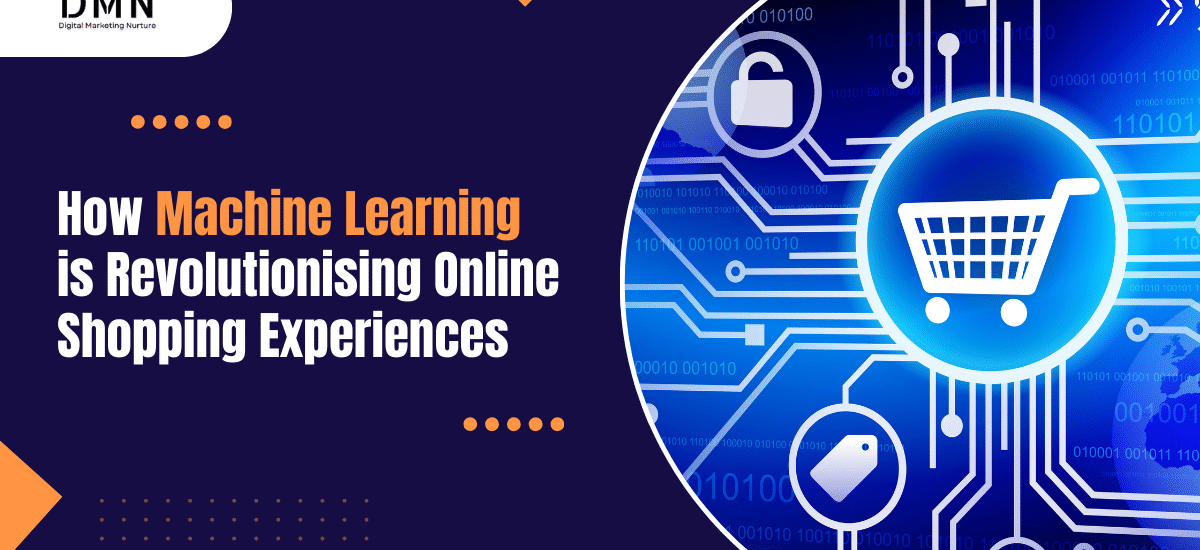
How Machine Learning is Revolutionising Online Shopping Experiences
Machine Learning has completely changed the way users shop online. It helps e-commerce platforms understand what customers like, predict what they might need next, and offer products that match their interests. Today, from clothes and gadgets to groceries and home decor, everything is just a click away — because of Machine Learning making commerce smarter, faster, and more personal.
Have you ever wondered how online platforms know your preferences so accurately? That’s because ML analyzes your activities and creates personalized, more enjoyable shopping recommendations.

What is Machine Learning and How It Works in E-commerce
Machine Learning is a branch of Artificial Intelligence that allows systems to analyze data and improve automatically without being explicitly programmed.
In e-commerce, Machine Learning algorithms analyze customer data — browsing history, purchases, clicks, and preferences — to make accurate predictions and offer relevant suggestions.
Example: When you search for “wireless headphones”, the website might later recommend “wireless headphones”. That’s Machine Learning working behind the scenes, studying your behavior and offering smarter results.
“Over 80% of e-commerce companies use Machine Learning to enhance customer experience.” — Forbes
🎯 Personalized Product Recommendations for Every Shopper
One of the most visible applications of Machine Learning in e-commerce is personalised product recommendations. Platforms like Amazon, Flipkart, and Netflix use algorithms to analyse what users view, like, and buy — then recommend products tailored to each individual.
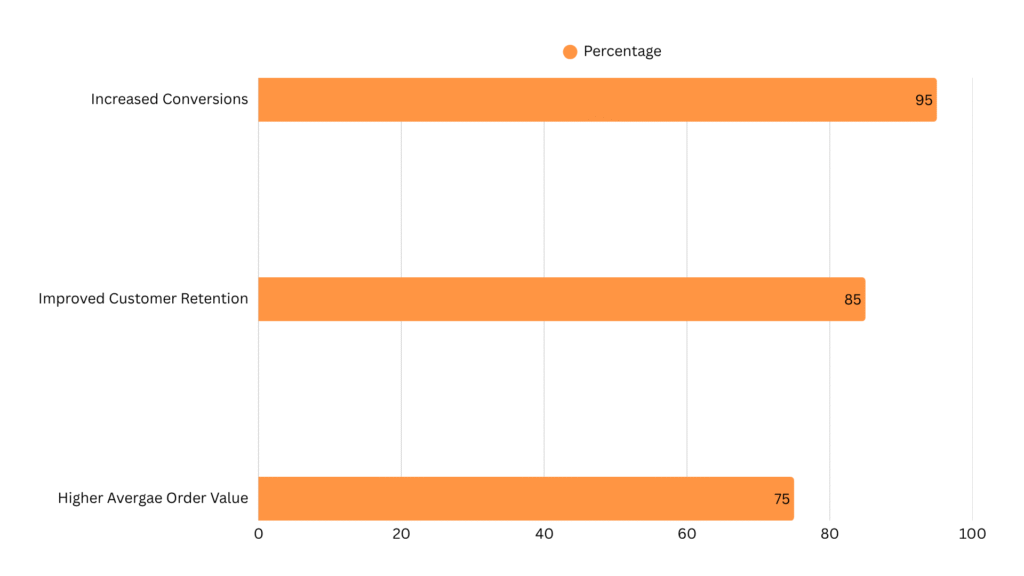
Impact of Personalized Recommendations:
🔍 Smarter Search and Voice-Based Shopping Assistance
Machine Learning improves how customers search for products on online platforms. Instead of traditional keyword searches, semantic search helps the system understand meaning and intent — not just words.
Example: If a user types “light summer dress,” Machine Learning identifies that they want breathable, lightweight clothing, not just any “dress.”
Voice assistants like Alexa, Siri, and Google Assistant also enhance the online shopping experience. Many users now prefer saying, “Order me a new phone case” instead of typing — and ML helps these assistants understand and process natural language accurately.
“Nearly 50% of online shoppers use voice search to find products faster.” — Think with Google
💬 AI Chatbots for Faster, Friendlier Customer Support
They operate 24/7 to answer queries, track orders, and solve problems instantly.
Modern chatbots go beyond scripts — they understand context and can even detect emotion in messages. If a user sounds upset, the bot can respond empathetically or connect them to a human agent.
“AI chatbots can handle up to 80% of routine e-commerce customer queries instantly.” — IBM Report
Benefits of AI Chatbots in E-commerce:
- Faster response time
- Round-the-clock availability
- Improved customer satisfaction
- Reduced operational costs
🔒 Fraud Detection and Secure Online Transactions
Security is crucial in e-commerce, and ML helps detect and prevent fraud by:
- Monitoring transactions in real-time
- Spotting unusual patterns or suspicious activity
- Automatically blocking or verifying risky actions
Example: If a login happens from a new country or a purchase amount is unusually high, ML can trigger verification — protecting both the shopper and the e-commerce platform.
Machine Learning Security in E-commerce
- Fraud Detection |
- Data Protection |
- Safe Payments
📸 Visual Search and AI-Driven Shopping Experience
Visual search allows customers to upload a photo of a product — like a dress, shoes, or furniture — and instantly find similar items on e-commerce sites.
This ML-powered feature, used by Pinterest and Google Lens, identifies colors, patterns, and textures to deliver accurate results.
Conclusion – How Machine Learning Makes E-commerce Smarter and Simpler
Machine Learning has revolutionized how people shop online.
It drives:
- Personalized product recommendations
- Smarter search and voice shopping
- Visual search
- AI chatbots
- Fraud detection and security systems
Machine Learning in e-commerce is not just a trend — it’s an essential part of Digital Marketing. It enables platforms to understand customer behaviour, predict preferences, and deliver highly relevant shopping experiences. By analysing millions of data points in real-time, Machine Learning helps e-commerce businesses make faster, smarter, and more accurate decisions.