



Role of Data Analytics in Digital Marketing
INTRODUCTION
In today’s digital age, every click, view, and purchase leaves behind valuable information. This information, when analyzed properly, can help businesses make smarter decisions. That’s where data analytics comes in. Data analytics plays a central role in digital marketing by helping companies understand customer behavior, measure performance, and plan future strategies more effectively
Understanding Data Analytics
Data analytics refers to the process of collecting and analyzing raw data to find meaningful patterns and insights. In digital marketing, it helps marketers learn what works best for their audience. For example, analyzing website traffic, bounce rates, or social media engagement provides valuable feedback. These insights help marketers adjust their campaigns for better results.
How Data Analytics Shapes Digital Marketing Strategies
-
Enhances Customer Targeting
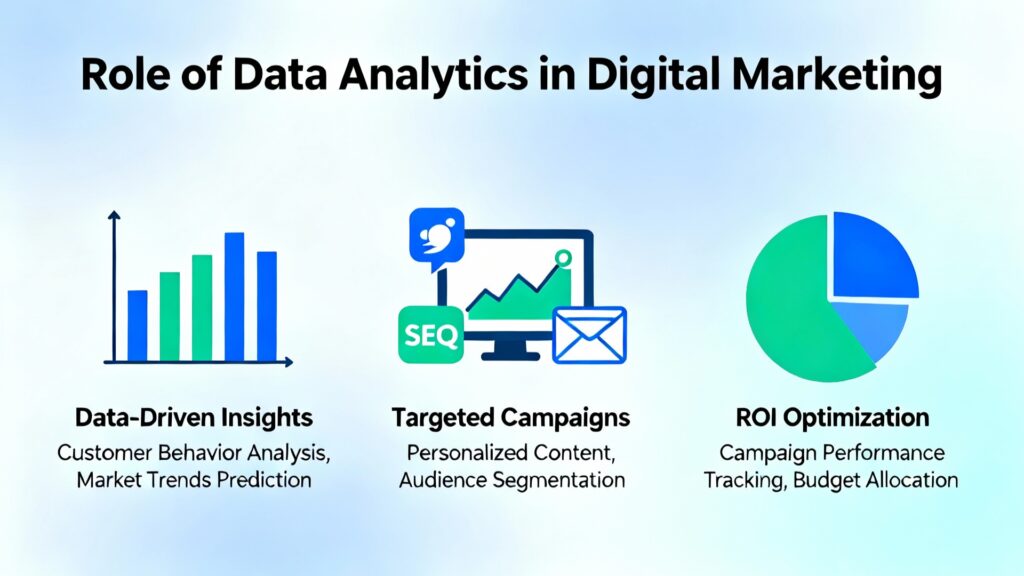
By studying data such as age, location, and preferences, marketers can identify their target audience more precisely. This leads to personalized marketing campaigns that attract the right people.
-
Improves Campaign Performance
Data analytics tools track metrics like click-through rates and conversion rates. This allows marketers to understand which campaigns perform best and where improvements are needed.
-
Optimizes Budget Allocation
With clear data insights, businesses can spend money only on marketing platforms that deliver results. This ensures a higher return on investment (ROI).
-
Predicts Trends and Behaviors
Data analytics also helps predict upcoming trends by analyzing past behavior. This allows marketers to prepare for future demands and stay ahead of competitors.
Tools Commonly Used in Data Analytics for Marketing
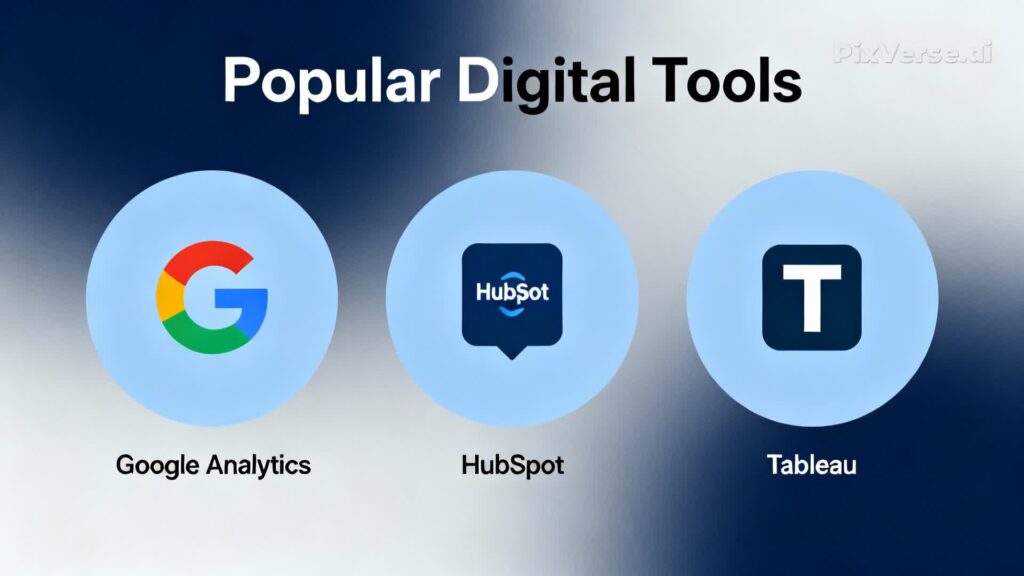
Popular tools such as Google Analytics, HubSpot, and Tableau help marketers collect and visualize data. These tools simplify complex information into easy-to-understand charts and graphs, making it easier to plan marketing actions.
CONCLUSION
Data analytics is no longer just an option but a necessity in digital marketing. It empowers marketers to make data-driven decisions that enhance customer experiences and business growth. In short, understanding data analytics helps students and future professionals see how technology and marketing work together to shape the business world.